Introduction
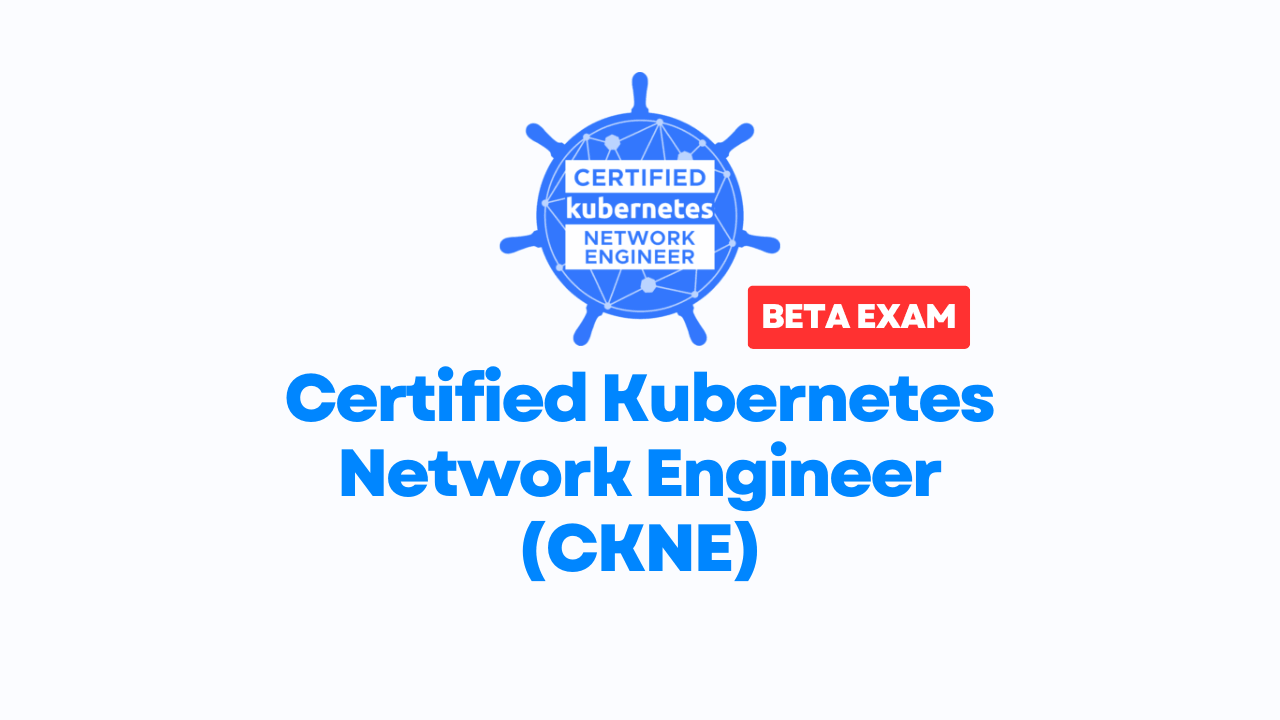
The Linux Foundation has opened the beta for a new certification: the Certified Kubernetes Network Engineer (CKNE). If CKA covers the operational side of running a cluster, CKNE goes deeper into the networking layer, CNI, service networking, traffic management, security, and observability.
Why Does This Matter?
- Networking is often the weakest spot. Most Kubernetes admins can deploy and scale workloads, but debugging CNI issues, service mesh traffic, or NetworkPolicy behavior is a different skill set.
- It fills a real gap in the certification track. Until now, there wasn’t a certification purpose-built for platform, network, or SRE engineers who own the networking layer.
- Beta pricing is a fraction of the eventual cost. $99 now versus $445 after general availability.
What CKNE Covers
The exam is a 2-hour, remote-proctored, performance-based test with 15-20 tasks, split across five domains:
- Core Infrastructure and CNI (15%) – installing/configuring CNI plugins, IPAM, pod CIDR allocation, packet-level troubleshooting with iptables/ip/tcpdump, multi-interface pods
- Service Networking and DNS (25%) – L4 services, kube-proxy and CNI alternatives, CoreDNS customization, Gateway API (Gateway, HTTPRoutes), troubleshooting service traffic
- Advanced Traffic Management (20%) – optimizing LLM traffic, egress gateways, cross-cluster service discovery and load balancing
- Network Security and Policy (25%) – NetworkPolicies, node/pod-level encryption, TLS certs for Gateway API, pod-level authN/authZ
- Observability (15%) – metrics-based network health, distributed tracing for performance issues, traffic auditing via logs
There are no prerequisites, though CKA-level Kubernetes administration skills are assumed as a baseline.
Beta Details
Warning
Beta window: September 15–28, 2026. Attempts must be scheduled by September 27, and reservations need 24 hours’ lead time.
- Price: $99 during beta (regular price after launch: $445)
- Attempts: One attempt, non-refundable and non-transferable
- Format: Remote-proctored, 2 hours, 15-20 performance-based questions
- Results: Scores release at general availability in Q4 2026 (exact date TBD); candidates who pass get their badge after the end-of-exam survey
- Validity: Certification valid for 2 years, with 12-month exam eligibility and one retake included
How to Enroll
If you work with Kubernetes networking day to day and want to lock in the beta price before it jumps to $445, you can enroll here:
You can also review the full exam competencies and domains on the official Linux Foundation page before signing up.
Conclusion
CKNE fills a gap that’s existed in the Kubernetes certification track for a while, a credential focused entirely on the networking stack rather than general cluster administration. With no prerequisites and a beta price well below the eventual $445, it’s worth a look if networking, security, or observability is part of your day-to-day Kubernetes work.
Happy Engineering!

Gineesh Madapparambath
Gineesh Madapparambath is the founder of techbeatly. He is the co-author of The Kubernetes Bible, Second Edition and the author of Ansible for Real Life Automation. He has worked as a Systems Engineer, Automation Specialist, and content author. His primary focus is on AI, Ansible Automation, Containerization (OpenShift & Kubernetes), and Infrastructure as Code (Terraform). (Read more: gineesh.com)


 The Desk