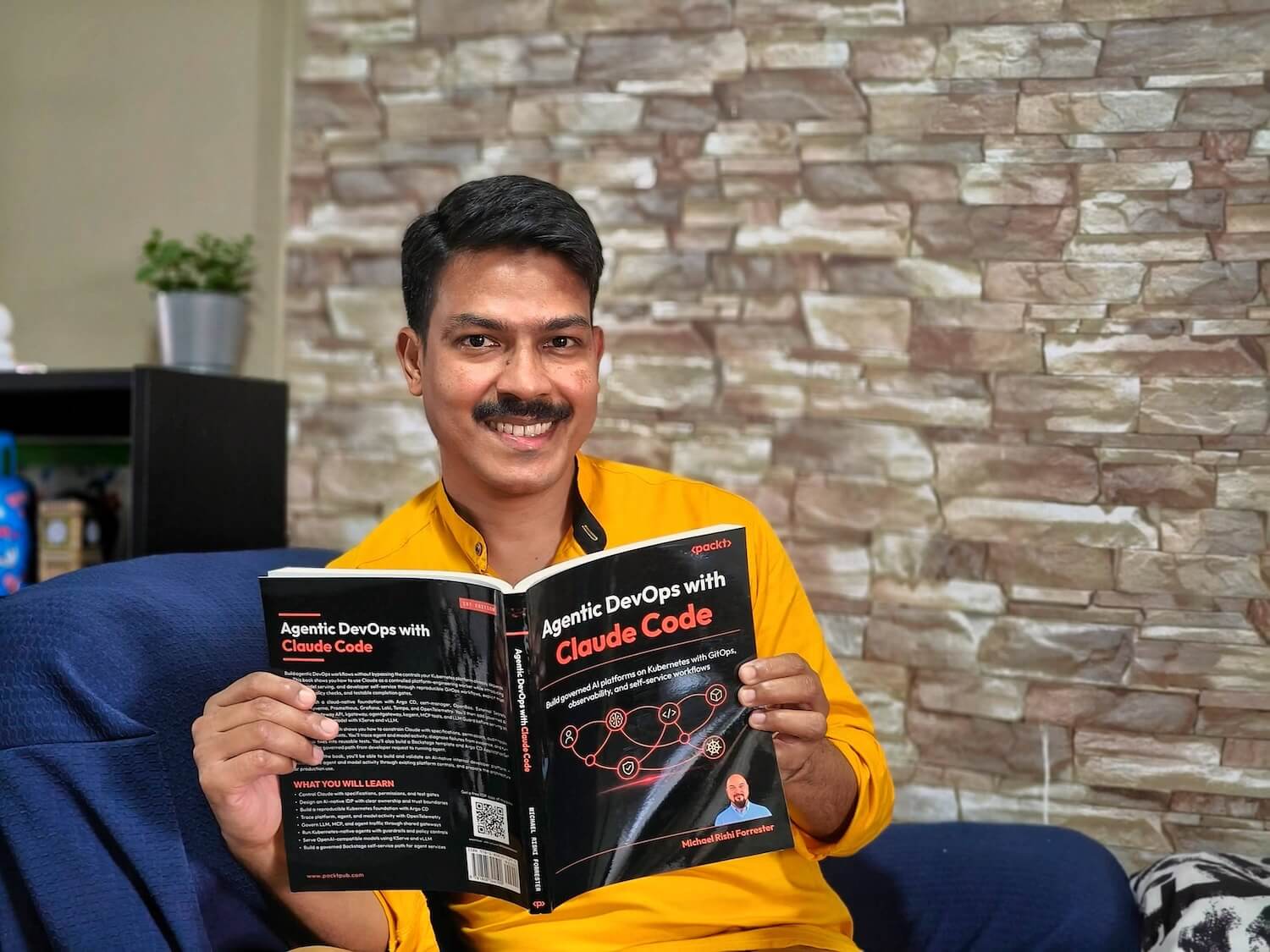
Author: Michael Forrester
Publisher: Packt Publishing (1st Edition, September 2026, 322 pages)
I picked up Agentic DevOps with Claude Code because I’ve been working on a project that involves Kubernetes, and I wanted to understand how other practitioners are securing and managing models and agent workloads on the platform. Most AI books I’ve seen lately are about writing code faster. This one is about something harder: letting an AI agent work on your platform without bypassing the controls your platform already depends on.
The book treats Claude as a controlled platform-engineering worker, not an open-ended assistant. You build a cloud-native foundation first and then layer agents and model serving on top of it, with GitOps, trust boundaries, and policy checks all the way through. The stack is very close to what many of us already run: Argo CD, cert-manager, OpenBao, External Secrets, and Kyverno for the platform, Prometheus, Grafana, Loki, Tempo, and OpenTelemetry for observability, then Gateway API, kgateway, agentgateway, kagent, MCP tools, and LLM Guard for agent traffic, and KServe with vLLM for serving OpenAI-compatible models. It wraps up with a Backstage template that gives teams a governed path from developer request to running agent.
The early chapter on governing Claude Code with specifications, tests, and permissions sets the tone for the rest of the book. It starts with a no-change preflight to establish the real state of the cluster and repository, then pins versions and sources, configures permissions and audit hooks, and works through a fail, build, pass, commit, stop loop. That discipline is what makes the later chapters work.
One of my key takeaways is the attention to data retention, training usage, and region when you call a model provider. The author makes a point I liked a lot: a convenient API is still a data boundary. It sounds obvious, but it’s easy to forget once things are working. You need to know which prompts, tool results, and responses leave your environment, where they go, and how long they stay there. If you work in a regulated industry, this part alone is worth the read.
The model management section treats model weights as artifacts, the same way we treat container images. That means verifying signatures and attestations at admission, not trusting whatever was pulled last. There’s also a table that maps workshop choices to production controls. It’s a simple idea, but very practical. Most of us build a quick lab version first, and this table tells you exactly what has to change before that setup goes anywhere near production.
The chapter on troubleshooting identity design stood out for me too. Agents tend to start with broad credentials because it’s the fastest way to get a demo running. The book walks through how to narrow those credentials down and expose only safe functions to the agent, instead of handing it everything and hoping for the best. If you have ever given an automation account more access than it needed “just for now”, you will recognize the problem.
This is not a beginner book. You will get much more out of it if you are already comfortable with Kubernetes, GitOps, and basic observability tooling. But if you’re a platform engineer, DevOps engineer, SRE, or platform architect thinking about how to secure and manage models and agent workloads on Kubernetes, this is a practical, governance-first resource to have on the shelf. It doesn’t try to sell you on agents. It assumes you are already heading there and shows you how to get there without losing control of your platform.
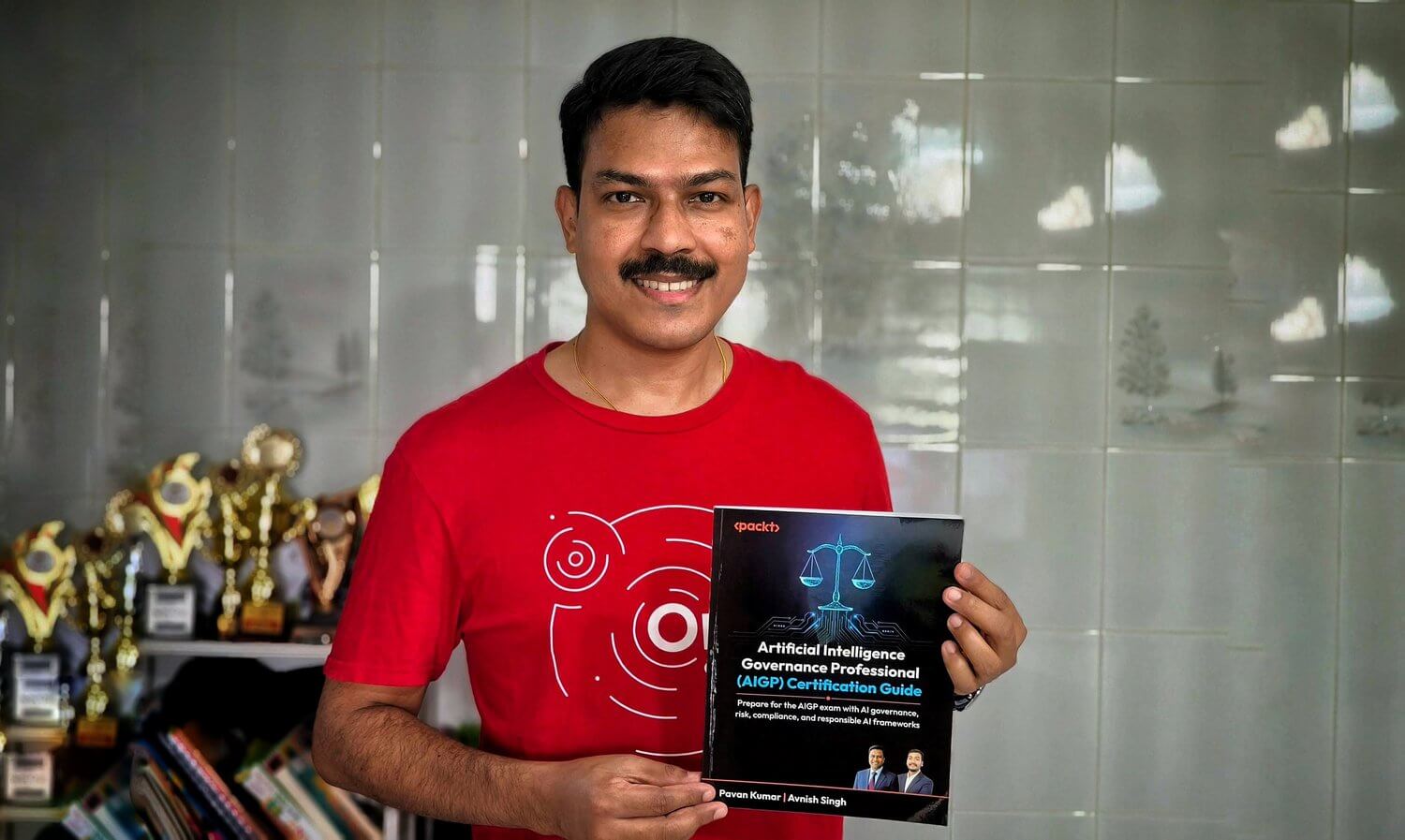
Thanks to Packt for the book copy.
Tip
Prefer to read it online? The book is also available on ExpertEdge by Packt. Use code TBLY50 for 50% off the first year of the yearly plan ($60 instead of $120).

Gineesh Madapparambath
Gineesh Madapparambath is the founder of techbeatly. He is the co-author of The Kubernetes Bible, Second Edition and the author of Ansible for Real Life Automation. He has worked as a Systems Engineer, Automation Specialist, and content author. His primary focus is on AI, Ansible Automation, Containerization (OpenShift & Kubernetes), and Infrastructure as Code (Terraform). (Read more: gineesh.com)
 The Desk